Organizer un marriage a Bukavu en RDC, some lessons learned!
Source:
I was full of joy when my two sisters announced their wedding to me a year ago. However, I was fearful and wondering if I would be able to plan and organize a proper wedding ceremony in a city like Bukavu.
As anytime I face a challenging situation or a big project in my career, I start looking on the internet to check if there is any guide on it. Unfortunately, I was not successful in finding a guide on organizing a wedding in Congo. This is the reason why I decided to write this guide to share the experience I acquired while planning for my sisters’ wedding.
In this post, I will share my experience with the planning and the lessons learned during that exercise.
The first draft of this post was made in May 2024, but two years later I had to organize my other sister wedding reason why I will update it with the experience shared in those two weddings.
Context
Bukavu is a city in the East of Congo, in the South Kivu province. The region is populated by two major tribes: the Bashi and the Barega. The Bashi are traditional people, and they have their own way of organizing weddings. I am Mushi, and my sisters married Bashis; our weddings were celebrated according to Bashi traditions.
Despite the fact that we can have multiple culture in the East of the Congo, the traditions and ceremonies related to these weddings are almost similar in both regions.
Note that the Democratic Republic of the Congo is massive—as large as Europe. While we share the same national identity, wedding cultures differ significantly across different parts of the country.
I find that people in the Eastern part of the country tend to be more moderate in their weddings, both in terms of the dowry requested and how they organize their parties. In the West, especially in Kinshasa, people often exaggerate both the dowry and the scale of their celebrations. This disparity may be one of the reasons why people do not get married as frequently in those regions.
The Ceremonies
A wedding in Congo involves many ceremonies, and sometimes it is easy to get lost in them. However, the major ones are:
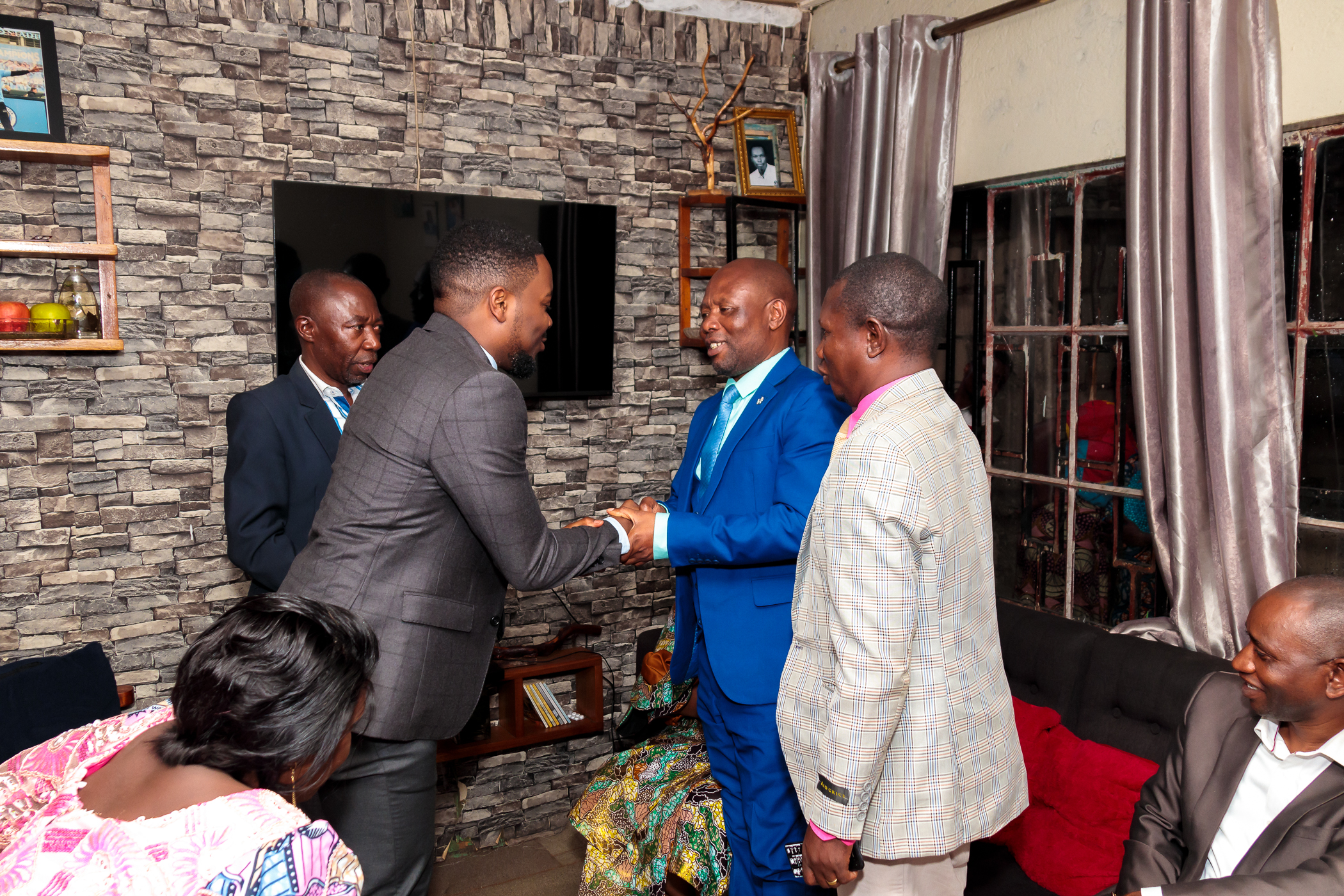
- Discussion de la dot: This is equivalent to the introduction ceremony. It is when the groom’s family comes to meet the bride’s family to discuss the dowry. The dowry, or la dot in French, is the gift the groom’s family gives to the bride’s family. Among the Bashi, this is valued in cows. For both of my sisters, they gave four cows each. In the past, people used to bring actual cows to the family, but more recently, they have started giving the monetary equivalent. A cow in South Kivu is valued in USD. You can bargain in the value of the cows, the price can range from 500 USD to 1000 USD. For our family we settle for 500 USD means I received $2,000 USD for each of my sisters’ dowries. After the introduction, the wedding date is fixed and the ceremony is announced.
Source:
-
Note on engagement rings and ceremonies: With globalization, we have started seeing engagement ceremonies happening in our culture as well. This ceremony mostly happens after the introduction. To be honest, I find it unfair for our women to ask for engagement rings in our culture, as it is more like copying what happens in Western culture where men do not pay a dowry.
-
The Timeline: The main ceremony usually happens six months after the introduction. For my sisters, we had the introduction in December 2023, and their weddings were planned for six months later, in late April and early May 2024.
-
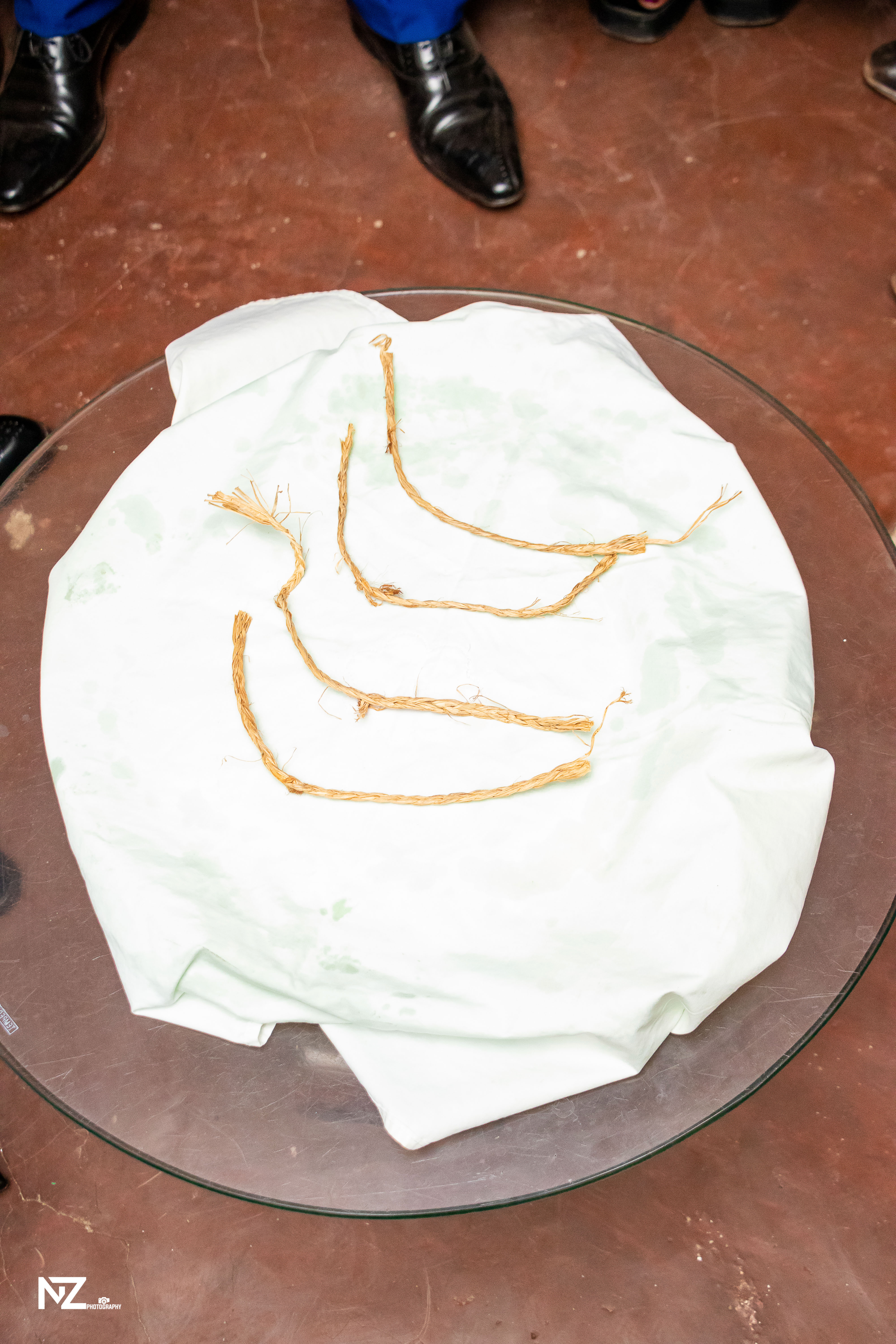
The Traditional Wedding (Dot): The first event of the wedding process is the traditional wedding, or dot. This is the moment when the groom’s family brings the dowry to the bride’s family.
Source:
Since my two sisters married different men from different families, we had to organize two separate traditional weddings. This meant organizing two different parties on two different dates. The budget for each ceremony was around $1,000 USD for both food and drinks.
Source:
-
The Civil Wedding: Following the traditional wedding, there is the civil wedding. This is when the couple goes to the registry office to officially register their traditional marriage. In my understanding, this is the official legal ceremony. For this, we had to make arrangements and book a location where the couple and the registrar could celebrate the marriage.
-
The Goodbye Party: (Fete d’aurevoir) After both the traditional and civil weddings, we had to plan the “goodbye party.” This is the party where the bride’s family says goodbye to their daughter. Some may ask, “Why not have one single wedding party?” In ancient times, it used to be like that; both families would come together to organize one ceremony and invite both sides. However, as families have grown larger, it has become almost impossible to agree on a single way of organizing the celebration. This is why the groom’s family and the bride’s family now host their own separate parties. Since our family was marrying off two daughters at once, we only had to host one party for this part, and it was the largest party I have ever planned. The rest of the post will be about how I planned this ceremony.
-
The Religious Wedding: After the traditional party, there is the religious wedding ceremony. Depending on the couple’s religion, they go to a church to celebrate their marriage. This is what Europeans call a “white wedding.”
-
The Groom’s Party: On the same day as the religious wedding, the groom’s family hosts their own party for their guests. Since my sisters married two different men, their husbands had to host two separate parties. I was not involved in those ceremonies, so I will not discuss them in this post.
-
Ku Higula: After the traditional, civil, and religious weddings, there is an additional ceremony called Ku higula. For this ceremony, the groom’s family visits the home where their daughter is now married. Most often, the groom’s mother “gives the kitchen” to her daughter-in-law. This is a small ceremony that does not involve many people; only close family members are invited.
I have talked a lot about the ceremonies; now, let me tell you how I actually planned them.
The planning.
A key to a successful party in the DRC, as anywhere in the world, is centered around the following components: the venue, the guests, food, drinks, music, and service. Let me explain how I managed them to have a successful party.
The venue
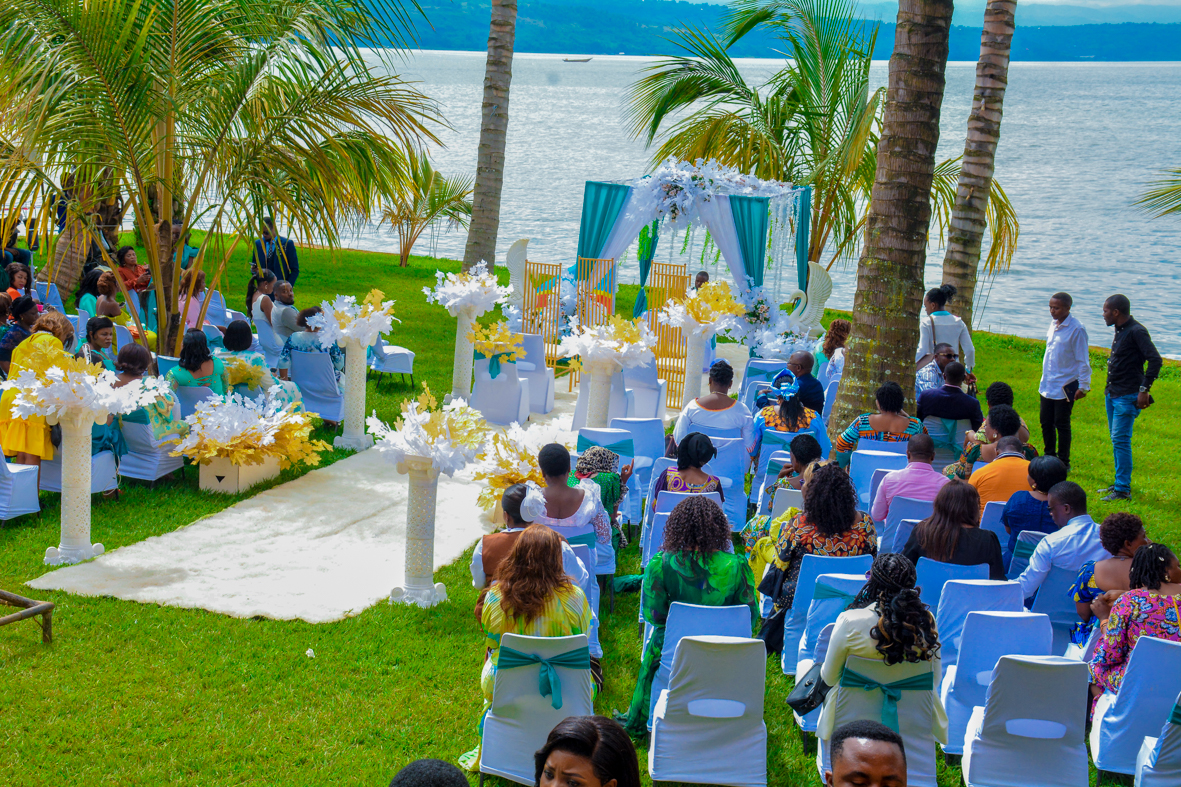
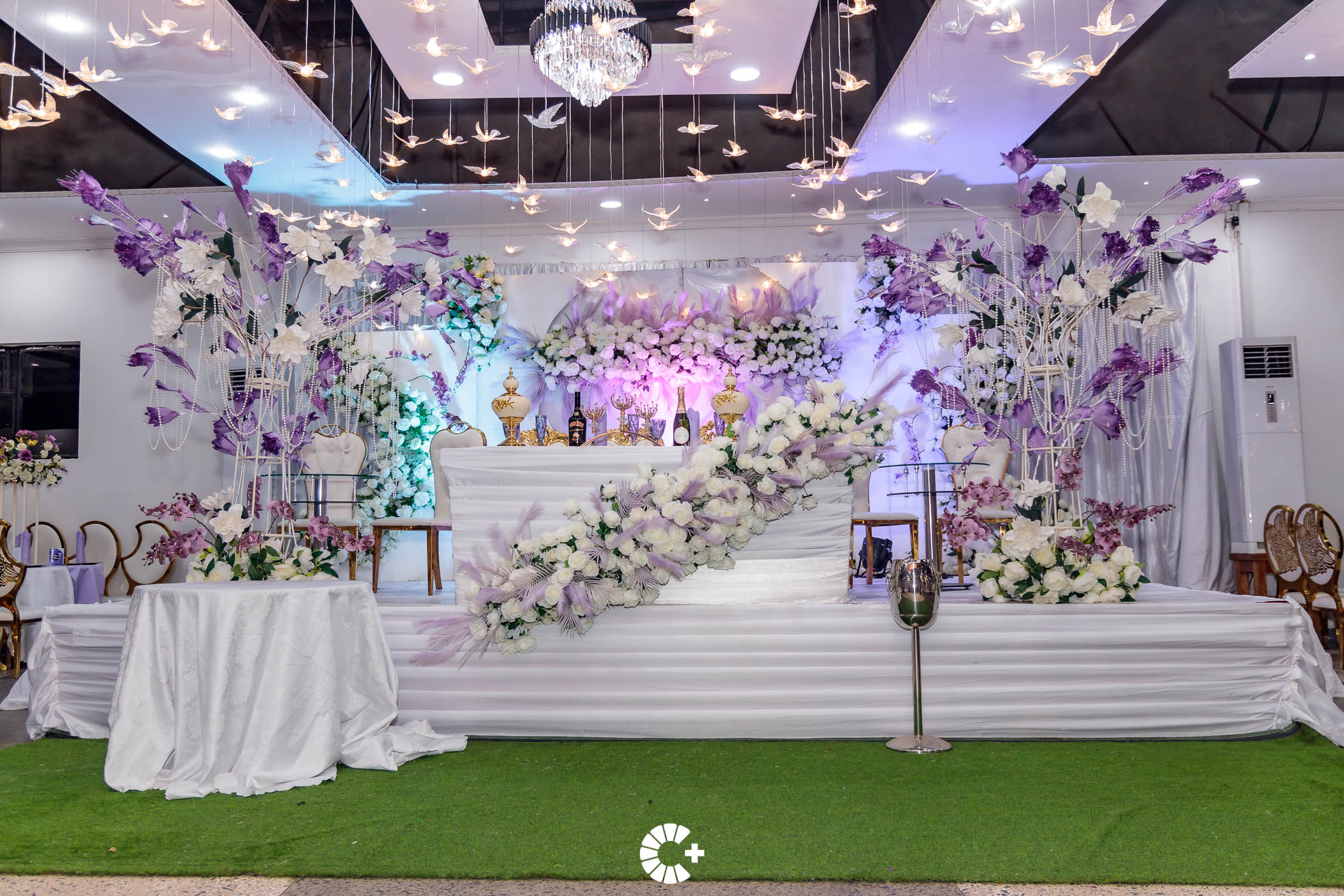
The venue was the first element I booked for the party. We decided to host our party at the Elizabeth Room, which is one of the best venues in Bukavu. I booked the venue 6 months in advance. In total, the venue cost us 2,000USD,but at the moment of booking,we paid an advance of 500 USD. A few weeks before the event, we confirmed the remaining balance.
On top of the venue, we booked the decoration; generally, decoration costs around 600USD,but we managed to get it for 350.
So, in total, the venue and the decoration cost us $2,350 USD.
Look how stunning the venue looked:
Source:
I have to admit that $2,000 USD for a venue in Bukavu was a bit expensive! Currently, we can find good venues for $500 USD which come with good decoration.
Also, we need to note that some venues are stricter and restrict who you can bring for the decoration. They charge you more money for the decoration.
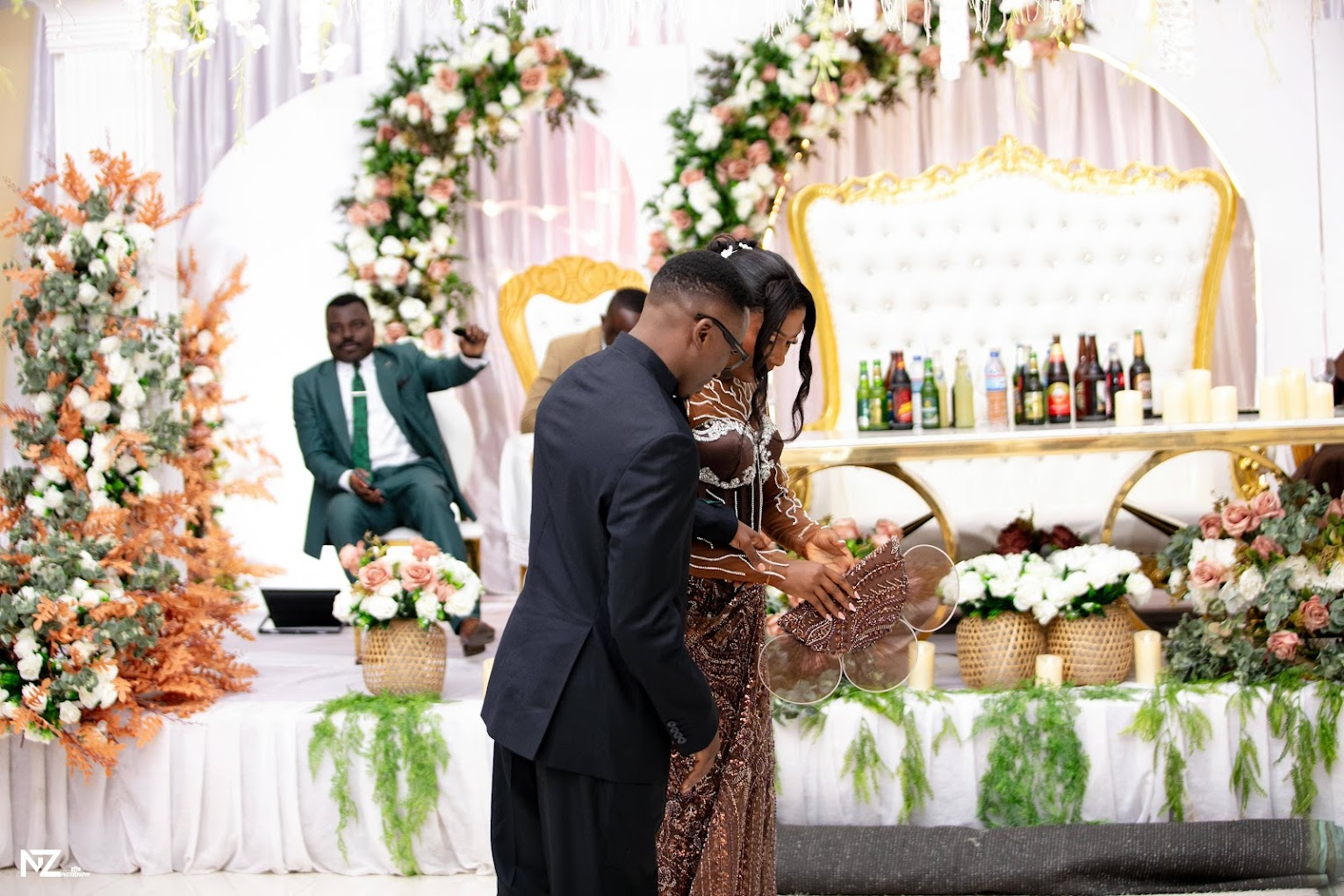
Here is a picture of the 500 USD venue and 350 USD decoration I used for my third sister wedding.
Source:
Choosing the master of the ceremony
Yes, the master of ceremonies—he is the person we call the president of the ceremony. He is a person who will work closely with the family to manage everything related to the ceremony.
He needs to be a person close to the family who will understand both the tastes of the groom and bride and the tastes of the family.
Food (Catering Service)
After the venue, we started looking for food to serve the guests.
We found a catering service that agreed to provide food for $6 USD per plate. With 500 guests, that cost us $3,000 USD in total. The food was amazing; it was a great deal.
One of the best things about the catering service we used was their punctuality. They were on time, which does not happen every day in Congo. We invited them for 5:30 PM, and they were there with the food at 6:00 PM.
Look how the menu was presented and the food we had on the menu:
< PUT a picture of the Food >
Drinks
The drinks, the drinks! Besides the food and the venue, the quality of a party in Congo is judged by the drinks. Bashi people are known for drinking, and they will judge your party based on the number of bottles of beer you serve. There is no proper heuristic for planning drinks for a party in Bukavu.
People always recommend keeping $1/3$ of your drinks non-alcoholic and the rest alcoholic (beer, liquors, wine, etc.). As we were expecting 600 people, our first goal was to have 3 servings of drinks, or 1,800 bottles. Of those bottles, we had 600 for non-alcoholic drinks (sucree) and 1,200 for alcoholic drinks (beers, plus wine and liquors).
You can find more about how I planned the drinks in this Excel spreadsheet. For the drinks, we spent around $3,200 USD.
Note that we largely overestimated the drinks, and we ended up with a lot of leftover alcohol. We ended up with drinks worth $300 USD or more.
In Bukavu, with $2,000$ or $2,500$, you can host a good party in terms of drinks.
More on the drinks can be found in the spreadsheet in the tab boisson.
Invitations
One of the most challenging parts of this party was the invitations. As we were hosting the first wedding in our family, we didn’t know who to invite and who not to invite.
The first thing we agreed on was the number of guests. We set the number at $500$. Then, we had to figure out how to fit people into that number. It was not an easy task, but we organized it into categories. We had a fixed number of guests for each category.
We invited my father’s former friends, my mother’s friends, members of our family, two in-law families, the bride’s friends, and our neighbors.
We planned the party for $500$ people, but we ended up having $600$. Even then, there were still people who felt left out because they were not invited to certain ceremonies.
Another challenge was deciding which type of wedding invitation to use. The internet is filled with many invitation templates, but we decided to have ours made locally. It cost us $300$ USD to print $250$ invitations. We spent around $1.2$ USD per invitation.
If we had more time, we would have ordered the invitations from China. However, it takes around 30 days for them to be delivered to Bukavu. I was able to get good samples from a supplier in China, but I decided not to go with them.
We received the invitations 45 days before the event. Once we had them, we decided to plan the seating arrangements.
Sitting Plan
Upon making the invitation list, we created a seating plan to decide how to seat everyone at the party. This was one of the keys to our party’s success. The seating plan was not perfect, but once we reached 70% completion, I was sure the party would be a success.
A key success factor for this part was going to the venue to check exactly how many chairs and tables they had available. We also checked the layout (disposition) of those tables. Using the table layout and the total count, I created a spreadsheet containing each person’s name and their respective table number. I then used a Python script to generate the seating chart, which included the guest’s name on each individual place setting.
On the day of the ceremony, I had to teach my protocol team how to seat people; it took around an hour, and they mastered it perfectly.
Delivering Invitations
Delivering invitations in Bukavu is not an easy task. With no formal postal or reliable delivery service, we had to find an efficient way to distribute them.
Luckily, we hosted a family reunion a month before the wedding, where we invited most of our family members; from that event, everyone received their invitation personally. For the remaining guests, my mother and sister decided to deliver them door-to-door.
Another thing to note about delivering the invitations is that they need to be delivered by a family member. This is a way of formally informing them about the wedding and indirectly asking them for their wedding contribution. I will discuss contributions in a separate section.
People without invitations
In addition to the $600$ people who arrive with invitations, there is another group of people who do not come without an invitation: the groom and bride’s immediate families, which is usually about $4$ people. Then, there are the bride’s friends, typically $10$ to $20$ people. Therefore, on top of the $600$ guests, you need to reserve space for another $40$ people.
Most of the time, I forget to plan seating for this category, and it ends up messing up the entire seating arrangement of the party.
This is another crucial factor you need to consider.
DJ
Booking a DJ was not a difficult task; I found a family friend who was willing to play music for us for as little as $70$ USD. We found him two days before the wedding. He already had pre-made wedding playlists, and after we made a few customizations for our specific tastes, we were all set.
Host
In addition to the DJ, we needed a host for the event—or what we call an animateur in French. We selected a family friend who managed to host the entire ceremony. He was booked for $70$ USD.
Protocol
Another key factor for the party’s success was the service staff, or “protocol.” These are the group of individuals responsible for serving during the party; essentially, they are the waiters. We managed to serve the $600$ guests with approximately $30$ waiters. Each waiter was responsible for serving about $20$ people.
Final Cost
The final cost of the my two sister wedding in 2024 was around 10 000 USD for the party. I will share a breakdown of those cost in this spreadsheet.
How do people cover those ceremonies?
When you send an invitation to people, you are indirectly asking them for a contribution. These contributions can vary widely, ranging from as little as 5 USD to as much as 500 USD per person. I always consider a fair contribution for a ceremony to be at least 30 USD, as that is approximately what we spend per couple to host them.
For the recent wedding I hosted, I received around 3,500 USD in contributions from various guests. This covered approximately 30% of the total cost of the party.
I would say this covers the essentials for a successful wedding ceremony in Bukavu. However, please note that these insights come from my perspective as a male hosting a party for my sister. There are many other elements I did not take into consideration here! For instance, the decoration of both the civil ceremony venue and the white wedding venue are aspects that the bride and groom typically handle themselves.
Comments