A Letter to Young Congolese Finishing High School
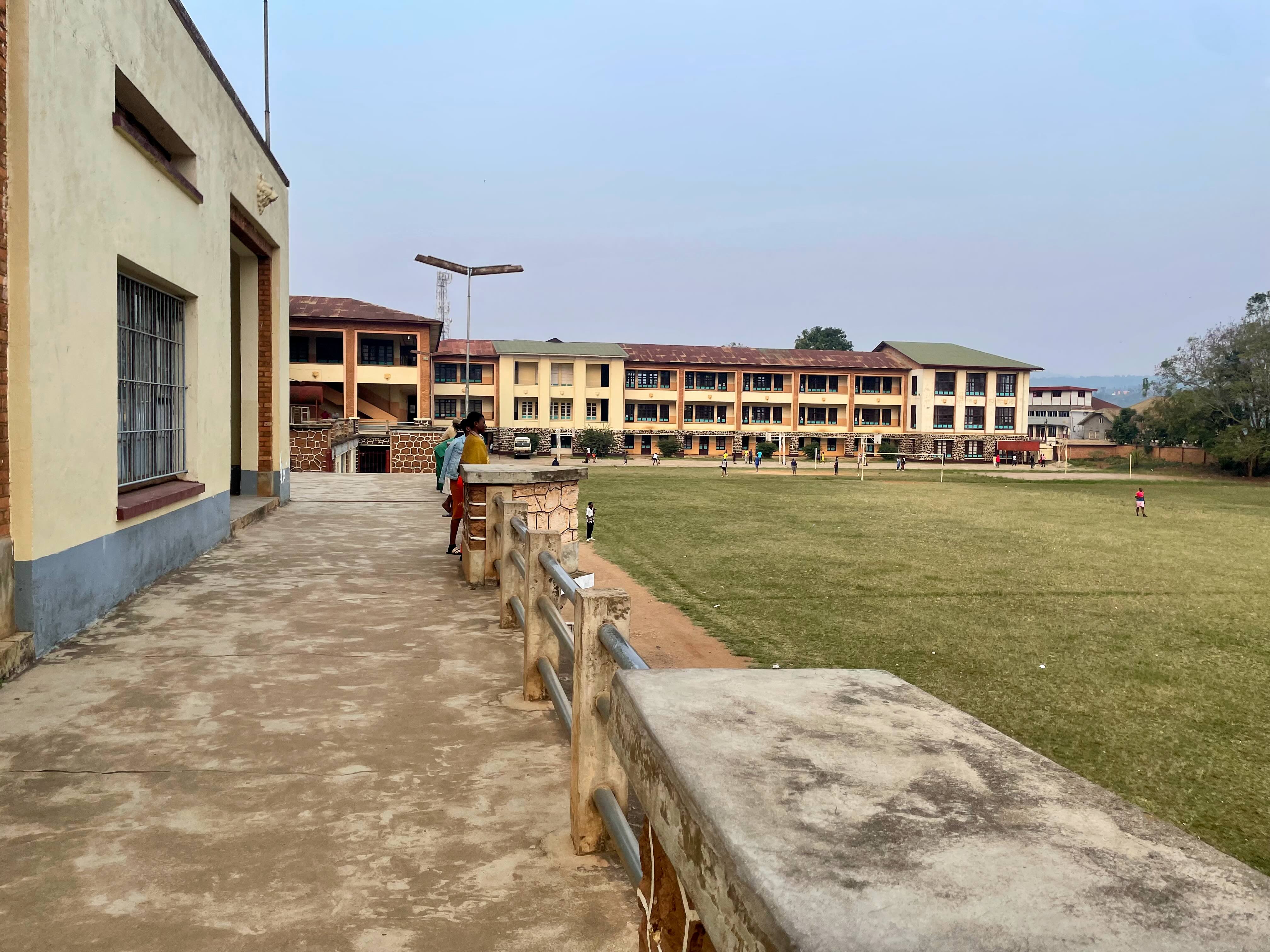
Source: (Picture by Me in July 2025)
C’est la période de l’année où les élèves du secondaire sont en train de terminer leur cursus et de passer leurs examens.
Je suis très nostalgique. Je me souviens d’avril 2010. Trois mois avant la passation des examens d’État, nous étions en retraite au Centre Amani et les prêtres commençaient déjà à nous préparer pour les études universitaires.
Nous avions la chance d’être entourés de gens qui nous faisaient penser à notre avenir et nous aidaient à le préparer. La plupart d’entre nous étions curieux et enthousiastes à l’idée d’entrer à l’université et de mener la nouvelle vie qui nous attendait. Cependant, certains étaient perdus et ne savaient pas quel chemin choisir et beaucoup de nos petits frères, aujourd’hui, n’ont pas la chance que nous avons eue.
Seize années plus tard, je suis ici pour écrire cet article et guider les jeunes congolais qui vont bientôt quitter le secondaire.
Pour une version Française de ce post veuillez cliquer ici:
Merci a Nzanzu Lwanzo pour la traduction francaise du post.
(One honest disclaimer: I can barely write in French anymore. So this is in English. Bear with me.)
First, Congratulations!!!
You made it. Finishing high school in Congo, especially if you went to a serious school, is no small thing. People will underestimate your education, but don’t let them. The foundation you built is solid. It’s generalist, it’s rigorous and it can take you anywhere in the world.
Wherever you are in the Democratic Republic of the Congo (Goma, Bukavu, Kisangani, Lubumbashi, Kinshasa, etc.), this post is for you. It’s for all the congolese young people who are about to get their diploma or got it already and are wondering what comes next.
Who Am I?
My name is Murhabazi Buzina Bwa Mpumbwe Espoir.I grew up and went to school in Bukavu, in one of the most prestigious high schools in the country at the time : College Alfajiri. I got my “Diplome d’État” in Math-Physics around August 2010. I still remember that mix of worries, excitement, and total confusion about what to do next.
Sixteen years later, I work as a Machine Learning Engineer at one of the largest banks in the UK, based in London. It is not as fancy as it may sound, but It pays my bills and I can afford to live in London and send some money to my family in Africa. Some young people in my generation look up to me, they call me le grand frère de ses petits frères. This post is me trying to live up to that.
I’ve spent over a decade in software engineering, worked across the East African tech sector and the international community. I hired, trained, and mentored engineers from across Africa and the globe.
What We’re Going to Cover
- Do I really need to go to University
- The harsh truth about universities
- What fields are worth studying right now
- Where to study, options across the region and beyond
- How to get the most out of wherever you end up
Do I really need to go to University?
This is an interesting question and I feel it is important for me to share my thoughts on it before even diving deep into fields and university choices.
We are in 2026, in the midst of an era where information and knowledge are available anywhere and anytime. Education is free, all you need is a computer or a smartphone, an internet connection, and the willingness to learn.
There are a lot of tools out there that allow you to explore the self-taught route, and I will recommend you go and have a look at them. One of those resources for Computer Science is Teach Yourself Computer Science and the Open Source University.
However, going through those curriculums by yourself requires self-discipline and dedication.
Universities offer some advantages:
- They give you credentials that we can verify! The whole world is built around this, and we need a way to check if you really studied.
- They provide a structured learning environment.
- They connect you with other people and networks. Whether we like it or not, a university will connect you with colleagues and like-minded people. I have met the best guys I know at university.
There are fields in high school in the Congo called “humanités complètes or techiques” such as Electricity, Mechanics, and the like. The goal of those fields is to prepare you for jobs as soon as you graduate from high school. I have seen guys who finished in Electricity and went directly to work at companies. By the time we finished university, they already had six years of experience. At that time, they could decide to go to university to get just the paper to prove that they have the credentials.
So, the bottom line is to get the best of both worlds: learn and keep on learning. Even if you decide to go to university, go there with a self-taught mindset, and you will be surprised by how much you can learn with that attitude.
Now, let’s move on to universities…
The Harsh Truth About Universities

Source: The Internet
Let’s get this out of the way: most private universities are businesses. Their primary goal is not your education, it’s revenue. This is true of African, European and American universities.
As for public universities, it depends on the country. Public universities often reflect their host nation’s leadership. If a country is struggling, its public universities will likely be as well. Many of the problems we have in Congo today are because our public universities were unable to produce good leaders or the reverse: our leaders are not able to make our universities better.
Another harsh reality is that each country prioritizes local students over foreign ones for admission to their best universities. If you want to study abroad, your best option would be a private university, but I have already mentioned the harsh reality regarding them: they are money-making machines, and their primary goal is not to provide education. In some countries, international students pay three times as much money as local students.
That doesn’t mean they’re useless. It means you have to be intentional. The students who thrive are not necessarily the ones who went to the best universities, they’re the ones who were curious, disciplined, and spent their time learning rather than scrolling on TikTok and Snapchat. The university shapes you, but it doesn’t define you.
What Should You Study?

Source: Ministere de l'education national
When it comes to the field, your options depend on what you studied in High School.
If You Finished in a STEM Track (Scientifique, Technique, Pédagogie)
You have excellent options. Here are the fields I’d highlight:
🔢 Mathematics & Statistics: If you’re strong in Maths, this is one of the best investments you can make. A solid Maths or Stats degree prepares you for Data Science, Machine Learning, and Quantitative Finance. The world still need Engineer, Quants, those guys who can understand and build complex systems. If you doubt me, go and check how many opening Google, Anthropic, Bloomberg or OpenAI, currently have form Machine Learning Engineers, Software Engineer and Data Scientists.
Don’t rush to any degree program that is Labelled Machine Learning or Data Science, most degrees that are labelled that way on undergraduate level are scams. Aim for a good degree in Mathematic or Statistic but with a strong component in Computer Science and Programming. Or for a good Polytechnic degree and then specialize in Computer Science.
⚡ Electrical Engineering : The world runs on energy. Congo sits on enormous energy potential. Electrical engineers are people who understand power generation, distribution, and systems. They will always be needed. AI is driving massive demand for computer infrastructure. This field is growing, not shrinking. A plus if you study this field with a focus on renewable energy.
🔧 Electronics & Chip Design : The software side of AI is largely solved. The next frontier is hardware: chips, semiconductors, embedded systems. This is a field with enormous global demand and very few people who truly understand it.
🏗️ Civil Engineering & Architecture : Back then, when we finished, everyone wanted to become a civil engineer because of Michael Scofield in Prison Break. Sixteen years later, still in demand. The world needs builders. Africa especially needs them. Infrastructure, housing, cities : this is generational work and it pays well.
🌍 Geology: We are Congolese. We live on top of one of the richest deposits of natural resources on the planet. With a geology degree and ambition, you aren’t just employable, you’re in demand, with companies fighting to hire you. Plus if you combine geology with geospatial science. Just have a look at job postings at Kobold Metal to check which profiles they are hiring for and check how much those jobs are paid. And plus, our president has sold our country to Americans. They will come to take our minerals and will give us jobs. 🤣smile in D Trump Voice🤣. So be prepared for them.
🤖 Mechanical Engineering & Robotics Manufacturing, automation, robotics still a deeply human field that requires years of real expertise to master.
🩺 Medicine If you have the stomach for it (literally and figuratively) and are strong in biology, medicine is one of the last fields that AI will automate. It’s 8+ years of hard study, but it is genuinely rewarding. If you are interested in this field and don’t want to spend 8 years at university, study public health or go to nursing school. Nursing is a niche people are sleeping on. A good degree in nursing combined with English will open doors to the world. The world population is dying, and we need people to take care of them.
🌱 Agronomy & Environmental Science We still need to eat. We have one of the biggest forests in the world, and we need to take care of it. Agriculture, food systems and environmental science have strong long-term prospects, especially in a continent with Congo’s land and biodiversity.
📊 Economics & Finance Don’t study economics to work at a bank. Study it to understand financial markets, economic systems, and quantitative finance. I mean real finance and econometrics with stats and heavy mathematics. Banks are automating rapidly, but the people who truly understand how money and markets work, who can read a Bloomberg terminal and model risk will always be in demand.
A note on software development Many of you have played with ChatGPT and want to become developers or AI Engineers. I understand. But the demand for general software developers has dropped significantly, we’ve automated a large part of that work. I won’t recommend it as a standalone career path. What I will recommend is any field that uses computing as a tool rather than making it the product itself.
If You Finished in a Non-STEM Track (Commercial, Littéraire, Social)
Don’t let anyone convince you that your options are limited. Some of the most successful people I know didn’t take a science track they just knew where to direct their energy.
Computer Science and IT is still very much on the table for you. The keys are curiosity and passion. You don’t need to have been the top maths student in school, but you do need to be willing to put in the work to strengthen that foundation. If you can do that, the door is wide open.
Economics & Finance is another strong path. The same rule applies brush up on your maths, and you’ll be able to navigate it well.
Psychology & Mental Health is a field I want to highlight specifically for us as Congolese. We carry a lot. Trauma due to wars and all life pressure and we have almost no one trained to help people process it. If you are drawn to understanding people and want to do genuinely meaningful work, this field matters more in our context than almost anywhere else in the world.
Entrepreneurship is less a standalone degree and more a mindset that pairs well with anything else you study. Whether you’re studying economics, communication, or agronomy learning how to build, manage, and grow something is one of the most transferable skills you can develop. But you can go to school to learn this as a skill.
Communication, Design, and Marketing are worth taking seriously. In a world where every business, NGO, and movement needs a voice and a visual identity, people who can tell stories, build brands, and understand audiences are in real demand. These aren’t backup options they’re legitimate careers.
Also special mention to anything related to Logistic and Supply Chain.
The honest truth is that your track matters far less than your curiosity and your willingness to keep learning. Pick the field that genuinely interests you, strengthen your weaknesses, and go deep.
Where Should You Study?
Here’s my honest assessment of your options, region by region. This section will be split in two parts. In the first one, I will speak about options in Congo and in East Africa. In the second one, I will write about opportunities in the rest of the African continent and opportunities outside Africa.
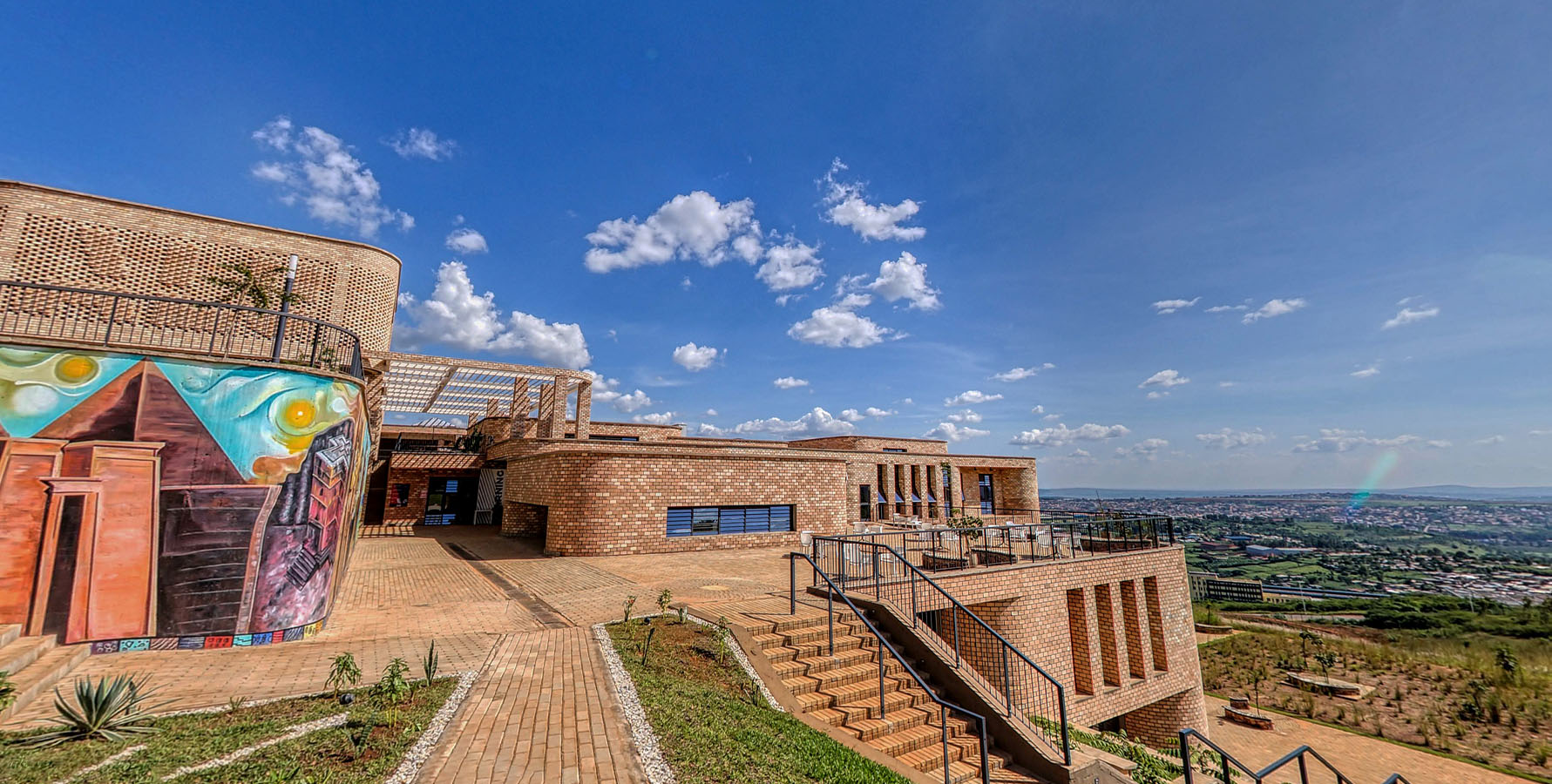
Source: source: https://www.alueducation.com/
🇨🇩 Congo
At home, I know most of you want to go and study abroad. However, if your parents cannot afford that or even if they can afford that, there is a lot of value in studying in Congo, despite what everyone will tell us about our universities. Let me talk about your options.
The order of universities here is not based on their ranking it just random based on how their name come in my thoughts.
UCB (Université Catholique de Bukavu) This is my first recommendation for anyone finishing in Bukavu. UCB is genuinely strong particularly in Agronomy, Medicine, Economics, and Architecture. It also has a decent Computer Science program. People will tell you to go abroad but UCB is better than many universities across the region. Don’t sleep on it. Another plus, UCB has many partnerships with universities in Europe such as Belgium and France. If you are smart, you can leverage those opportunities.
Université Officielle de Bukavu (UOB) is a good shout for their Geology, Economics, and Public Health program.
Université Libre des Pays de Grand Lacs: ULPGL(Goma) : this is where I went. It is a good university in the region. It has a good degree in engineering (electrical engineering, computer science and civil engineering) and economics.
It is affordable, but honestly, tribalism is killing this university. This is valid for most of the Protestant universities in the country. Pastors have privileges and favor their brothers in recruitment instead of recruiting competent people. (My friend who went there and taught there—please come and fight me… I am ready..💪🏿 LOL)”
Good shout to ISIG , la Sapientia in Goma and UCGT in Butenmbo
Universite de Lubumbashi, along with UNIKIN are the oldest public universities in the Democratic Republic of the Congo. It is known for its Geology, Electrical Engineering departments as well as a Mathematics Department and has produced some of the best mining engineers in the country.
ESI Salama is still a decent university in Lubumbashi. I have interacted with talented software engineers who were trained there.
Mapon University in Kindu I haven’t really interacted with students from this university but from what I can read online it seems to be a decent university with amazing programs.
Kinshasa / UNIKIN Unless you want to go into politics or you have the resilience to navigate serious institutional dysfunction, be cautious. That said, UNIKIN’s Polytechnics Department, Mathematics and Computer Science has produced some of the country’s finest engineers. If you have the grit, it can work.
The Architecture and Urban Planning schools there are also worth mentioning. ISAU and IBTP are good shouts.
Universite Protestante du Congo in Kinshasa is also a good shout if you want to study economics in the capital.
That being said, it’s worth mentioning that the universities in the Congo require an upgrade. We need to:
- Standardize degrees in English to improve international recognition.
- Our curriculum must evolve to place equal emphasis on leadership development and soft skills alongside technical knowledge.
- Most importantly, we must commit to zero tolerance for corruption, creating a transparent environment that serves the public good.
I understand a lot of work is being done in this area but there is still more to do.
Pro tip for those studying in Congo: our French curriculum is robust. I am a direct product of it. However, just make sure you stay sharp and take the initiative to learn English while on top of your studies. Aim to read, write, and speak English fluently by the time your degree is complete. Ideally, target an IELTS or TOEFL score of 5.5 or higher after graduation.
🇷🇼 Rwanda
ALU (African Leadership University) Kigali My top regional recommendation outside Congo. ALU has a distinctive education model built around real-world application, leadership, and study-abroad opportunities. I know graduates who did internships at Google and Bloomberg in London. They offer computer science, entrepreneurship and economics degrees. Fees are around $3,000/year but scholarships can bring that down to $1,500 and it prepares you for a master degree at CMU Africa. Forget about the politics and the Congo-Rwanda conflict and go and have your degree there. Alternatively they have a campus in Maurice Island. Please do consider that as well.
AUCA (Adventist University of Central Africa) A solid option, particularly for computer science. Good value.
Kepler & Akilah : decent institutions, though no longer operating in their original form. Worth researching current status.
ULK: Avoid. It is, in my honest assessment, primarily a money-making machine. Please I repeat again avoid especially the Gisenyi campus.. Lool… I don’t have anything about my friends who went to this university but honestly it is proper scam.. Again come and fight me… 🥊
🇰🇪 Kenya
Strathmore University : Nairobi A degree from Strathmore opens real doors. It’s respected across East Africa and beyond. Fees are around $4,000/year, and Nairobi is not cheap so factor that in. But the quality and the network are worth it.
Public universities JKUAT, Dedan Kimathi University, and University of Nairobi all have solid engineering and science programmes at lower cost.
Private universities Most are businesses in the truest sense. Research carefully before committing.
But kenya is the best country I will recommend, if you can afford to live there.
🇺🇬 Uganda
Makerere University Historically one of the best universities in Africa. Very hard to get into as a foreigner, but not impossible.
Kampala International University, University of East Africa, and ISBAT, all decent options worth considering. Good value for money but also be aware for business universities.
🇧🇮 Burundi
I’ll be direct: I’m not sure why someone leaving Congo would choose Burundi for university. If someone has a specific reason, I’m open to hearing it. Burundian should be the one coming to study in Congo.
Anyway, I have meet some decent guys who went to Ngozi university in Burundi.
🇹🇿 Tanzania
I haven’t explore Tanzanian universities but I have friend who are from there and there are some good university over there.
So before choosing a university, please take into consideration your familly situation, can you afford to live there? Pick university that can open you opporutnitiies that can teach you not only hards skills but also soft skills. Pick a city carefully, because it there where you will go and network. A big plus if a university offer study abroad opportunities and have partenrship with international universities.
One Last Thing
The most successful people I’ve hired and mentored across my career were not always the ones with the most prestigious degrees. They were the ones who were genuinely curious, who read outside their syllabus, who built things, asked hard questions, and didn’t wait to be taught.
Wherever you study: UCB, ALU, Strathmore, or anywhere else, your ceiling is mostly determined by you.
Congo has given you more than you realise. Now go build something with it.
Espoir, Garçon BK perdu à Londres.
[To be continued: scholarships, how to apply abroad, and how we improve Congolese education from the inside]
Comments